GMT-400 K2500 front end repairs

Stumpuller6.5

Shits gonna get Abrasive...
Lifetime Supporting Member
Joined
May 21, 2009
Posts
8,585
Reaction score
0
Location
Canukian Land
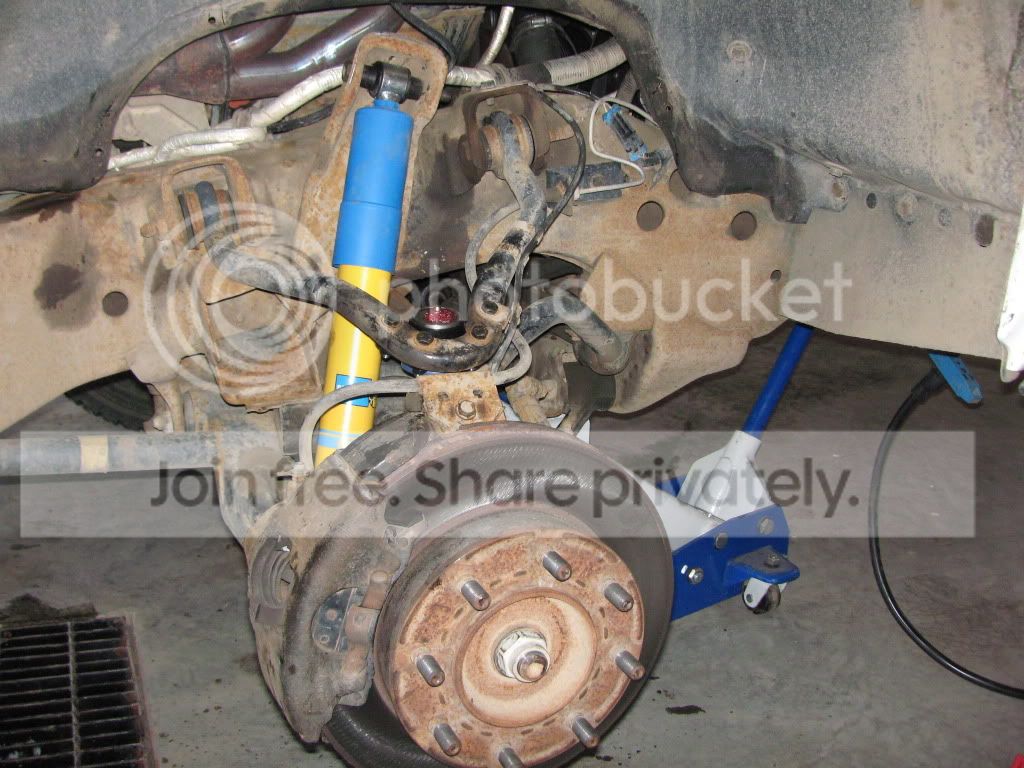
at this time installl your axle, grunt a swear here> _________ . put a bit of anti sieze on the splines of the axle for future ease. install the 6 inner flange bolts with blue loctite, and torque to 58 ft/lbs, install washer and nut on the outer end of the shaft, tourque it to 165 ft/lbs. at this time you can re install the lower shock bolt and torque it to 66 ft/lbs.

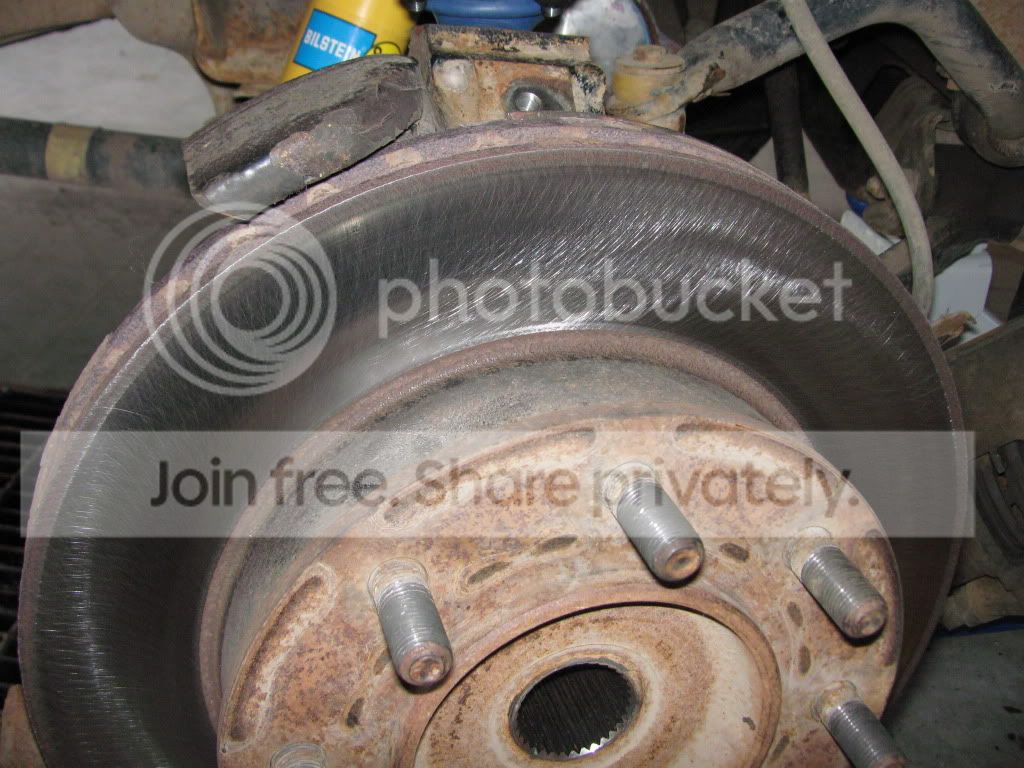
i opted to run the buffer on my rotrs for now (just rotate rotor by hand and buff away)
truckrepair029.jpg


you can now re-install your caliper (lube your pins first), torque the two retaining bolts to 15 ft/lbs. route your brake hose and install the retaining bolt into the knuckle (including the abs wire mount under it)
also route your abs wire and pinch the clamps back to hold it in place.
truckrepair031.jpg


so the only thing left to do is re-install your outer tie rod, it should be torqued to 46 ft/lbs, and its not a bad idea to throw some loctite on there. you may have to use a large prybar to put force againt the bottom of the tie rod to keep the stud from spinning. you can re-install your inner fender liner too.

That about wraps it up i will post all the torque specs seperatly for ease of copy-pasting info.

Its a good idea now to make sure everything is tight and secure, grease the rest of the truck while the grease guns out, install your wheels and torque the to 125 ft/lbs.
 

Stumpuller6.5

Shits gonna get Abrasive...
Lifetime Supporting Member
Joined
May 21, 2009
Posts
8,585
Reaction score
0
Location
Canukian Land
Torque specs

inner axle bolts (6) to 58 ft/lbs
outer axle nut (1) to 165 ft/lbs
Shock bolt/nuts (1) to 66 t/lbs
outer tie rod nut (1) to 46 ft/lbs
Brake hose braket (1) to 13 ft/lbs
Rotor/hub assy (4) to 133 ft/lbs
Lower ball joint nut (1) to 94 ft/lbs
Upper ball joint nut (1) 74 ft/lbs

I was not able to re-edit the first post with all the required tools so here is a re-cap

-3/8" and 1/2" rachet, 7/8" socket, 18mm socket, 13mm socket, 3/8" allen key or socket, 5mm allen key, 15mm socket and 12" extension, 36mm socket, ball pein hammer and
2or3lb steel hammer, prybars, a 6" and 10" works well. I highly recommend air tools, mostly to save time, and aggravation. in which case you would need a compressor, 1/2" and 3/8" impact and/or air rachet, air hammer and pin bit, also a ball joint press kit. (borrow one or rent one, or buy one for $100 bucks or so.) an upohlstry removal tool, dead blow hammer, 1/2" torque wrench, 3/8" torque wrench if your really anal about torqing.... as mentioned earlier a "pickle-fork" or ball joint/tie rod seperator can be used to seperate these items, do note that this WILL damadge the joints boot, redering it toast, some times you can get replacement boots but were not always so lucky. but if its the one your replacing who cares...:D

any and all constructive cristisism welcome, i know there are some spelling errors, I`m only human, and if something is missing or you have futher questions post up and we`ll help you out.

I have yet to complete the other side at this time, when completed i will flush the brake fluid, and guide you through it at that time.

I am not going to post how long this project should take, if i told you how long it took me you`d shit your pants, but thats becasue i`m documenting every step, taking pictures and loading them up and typing this story.... but plan for a FULL DAY in the garage out back for sure... :thumbs:
 
Last edited:

Texas Jim

Texas..It's a Whole 'nuther Country
Joined
Jun 18, 2009
Posts
49,927
Reaction score
0
Location
Ft. Worth
Great write up and HOW TO DO IT.

Thanks, that will be useful to people on down the road.
 

Stumpuller6.5

Shits gonna get Abrasive...
Lifetime Supporting Member
Joined
May 21, 2009
Posts
8,585
Reaction score
0
Location
Canukian Land
so to bleed the brakes i first sucked the old crap out of the resevoir, then filled it up, put the lid on, (not clipped on but sitting on to keep crap out. i then proceeded to bleed from the RR wheel cylinder, you will require a 5/16" wrench, but i recommend breaking it loose first with a socket and rachet (note this is a pretty confined space, there is little room between the bleeder and the spring pack) Have a buddy sit in the truck and run the brake pedal.

get him to hold down the pedal, then open the bleeder and allow the fluid out, or approx 2-3 seconds (or untill rapid flow stops) then close the bleeder. THEN tell your buddy to release the pedal. do this process many times untill there is clean fluid, you may be required to top up the level in the resevoir during the process. MAKE SURE you keep track of the level, if it gets to low it will allow air into the system, which will frustate you cause your gonna be there longer now....:D

once you have clean fluid from the RR bleeder, proceed to bleed the LR, this one won`t take as long as you have already brought new fluid to the right side and you only have to flush out a couple of feet of line. After the LR is clean go to the RF and bleed the calipers, you will need a 10mm wrench to do so. You will notice alot more fluid will come out when bleeding the front calipers, so again watch your fluid level!! after the RF is done Finish at the LF. when you have all clean fluid top up your resevoir and intall the lid, make sure the seal is clean. I highly recommend using brakleen to remove the fluid from the vehicle were it was bled out, another option that is do-able on the front calipers is to use small vacum hose to route the fluid to a container. it would be almost impossible to do so on the rear as there is very little room.

A problem you may run into is stripped out bleeders, all i can say is worst case scenario is you will have to replace bleeder, if you can find a replacement, most likley you will have to change the wheel cylinder or caliper. I don`t beleive they are that expensive anyways. the replacement of calipers and/or wheels cylinders is another HOW TO in itself... which i won`t be doing at this time....

The second possible problem is when you loosen the bleeder nothing comes out, dirt/rust has built up and plugged the bleeder. If you can remove the bleeder from the vehice, get a small drill bit and clamp it in a vise, then run the bleeder on the bit to clean out the center bore, you may also be required to clean out the bore on the taper on the bottom of the bleeder. when cleared with the bit blow it out with compressed air. put on a dab of anti-seize to the threads, re-install it and continue with the bleeding process.

the amount of fluid used to completly flush the system was approximatley 1 litre (or about a pint) of DOT 3 brake fluid.

Hope this helps, again any Questions go ahead and post a question, we are here to help.

Now its time for me to take a nap, I`m bagged...
:thumbs:
 
Last edited:

Draenor

KILL ALL HUMANS!!!!
Joined
Jun 2, 2009
Posts
5,896
Reaction score
0
Location
Now in Scott,LA
When you removed the axles, did you mark the alignment where they bounted to the flange? I know sometimes, if I dont do that, I get a small vibration up front after I go for a test drive.
 

Members online

No members online now.

Latest posts

Forum statistics

Threads
28,841
Posts
1,109,565
Members
4,800
Latest member
SpeakerMan
Back
Top