


davbell22602
Stihl Chainsaw Man
oil pressure problems
The first indication of trouble may be a flickering oil pressure warning light or a low oil pressure reading on a dash gauge. If the warning goes unnoticed or is ignored, the next clue that something is amiss may be valve clatter as the hydraulic lifters or lash adjusters are starved for oil and ingest air. If the motorist keeps on driving in spite of the obvious warnings and audible protests from under the hood, the next sound he hears may be rapping or knocking noises from the rod bearings, which will eventually be followed by dead silence as the [COLOR=blue! important][COLOR=blue! important]engine[/color][/color] seizes and the vehicle coasts to a stop.
All engines will lose a certain amount of oil pressure over time as normal wear increases engine bearing clearances. But unusually low oil pressure in an engine regardless of mileage is often an indication that something is seriously wrong and requires immediate attention. So anytime a vehicle has a low oil pressure condition, or you are aware of any of symptoms that may be due to a loss of oil pressure (warning light on or flickering, low gauge reading, valve noise or bearing noise), don't delay in investigating the cause.
CAUSES OF LOW OIL PRESSURE
In a high mileage engine, low oil pressure is often due to a combination of worn main and rod bearings and [COLOR=blue! important][COLOR=blue! important]crankshaft[/color][/color] journals. The oil pump itself does not create pressure. It produces flow and the resistance to that flow produces pressure. Resistance is created by the orifices in the [COLOR=blue! important][COLOR=blue! important]engine [COLOR=blue! important]block[/color][/color][/color] through which the oil flows, and the amount of clearance between the bearings and crankshaft journals. As the bearings wear, clearances increase allowing increased flow which reduces pressure.
Okay, so you already knew that. But what you may not realize is that it doesn't take much of an increase in bearing clearances to cause a noticeable drop in oil pressure as well as noise. This applies to brand new engines as well as high mileage ones.
Excessive bearing clearances (more than about .001 inch per inch of diameter of the crankshaft journal) can cause up to a 20 percent or greater drop in oil pressure, which may in turn have an adverse effect on lubrication elsewhere in the engine (such as the camshaft and upper valvetrain, especially in overhead cam engines). Whether the excessive clearances are due to normal wear or "loose" assembly tolerances makes no difference because the end result is exactly the same. Excessive bearing clearances will also increase engine noise and pounding, which over time can lead to bearing fatigue and failure.
Recommended bearing clearances vary a great deal depending on the engine application, but many engine rebuilders today aim for about .001 to .002 inch clearance in the main and rod bearings. This compares to as much as .004 inch of clearance that may be present in some new engines from the factory!
Excessive clearances elsewhere in the engine can also reduce oil pressure. This includes wear in the lifter bores, excessive clearances between the camshaft journals and cam bearings, and excessive end play in the cam. Of course, any cracks in the oil galleys, leaking galley plugs, or leakage between the oil pump and block will also reduce pressure.
The only cure for low oil pressure due to excessive bearing clearances is to reduce the clearances by replacing the bearings or overhauling the engine. Installing a new oil pump or a higher pressure pump won't help because the bearings have too great a leakage rate to hold the required pressure. Installing a higher volume oil pump can increase flow and regain a little lost pressure. But the underlying clearance problem will still be there, which will accelerate bearing noise, wear and fatigue.
Another common cause of low oil pressure is wear or excessive clearances in the oil pump itself. Specifications vary, but as a rule gear type oil pumps should have less than about 0.003 inches of end play between the gears and cover. The clearances between the teeth and pump housing should usually be less than about 0.005 inches. With rotor style pumps, the clearance between the outer rotor and pump housing should usually be less than 0.012 inches, with no more than about 0.010 inches between the inner and outer rotor lobes. Too much clearance inside the pump will reduce the pump's ability to pump oil efficiency, which reduces flow and pressure.
Because of the close tolerances that are required inside the oil pump, debris of any kind can cause havoc if it gets sucked into the pump. Anything larger than the minimum internal clearances can score or jam the pump. Debris such as pieces of old valve stem seals, gasket material, plastic chips from a worn timing chain gear, bearing material, casting flashing, sand, dirt, etc., may be harmful or fatal if ingested.
But how can this kind of crud get inside the pump, you ask? The screen that is on the oil pump pickup tube in the crankcase only prevents relatively big pieces of debris from being drawn into the pump, and even then it does not always do that because most pickup screens have some type of bypass valve or vent that allows oil to bypass the screen if the screen becomes plugged or the oil is too thick to pass through the screen. The holes in the screen itself measure about 0.040 inches square, which are huge openings as far as debris is concerned. But the holes are large by design so the screen will flow an adequate amount of oil when the engine is cold and the oil in the crankcase is thick (which is why you should always follow the vehicle manufacturer recommendations on oil viscosity). All this means the oil pump is the only engine component that is continually lubed with unfiltered oil! The oil does not pass through the filter until after it leaves the pump. So any abrasive debris that finds its way into the crankcase will first pass through the pump before it is trapped by the filter. No wonder oil pumps wear out and break.
Restrictions in the pickup tube screen can choke off the flow of oil into the pump, reducing flow and pressure. Even a relatively small amount of varnish buildup on the screen can restrict oil flow at higher engine speeds. A coating only .005 inch thick on the screen will reduce the total "open" area of each hole to .030 inches, causing a whopping 44 percent reduction in oil flow!
The pressure [COLOR=blue! important][COLOR=blue! important]relief [COLOR=blue! important]valve[/color][/color][/color], which may be located on the pump body or elsewhere on the engine, can be yet another cause of low oil pressure if the valve sticks open or is held open by a small piece of debris. The relief valve is designed to limit oil pressure as engine speed increases. The valve opens when pressure reaches a preset value (typically 40 to 60 psi). This vents oil back into the crankcase and limits maximum oil pressure in the engine. The reason for doing so is to prevent oil pressure from reaching dangerous levels. Too much oil pressure can be just as bad as too little because excessive pressure can rupture the [COLOR=blue! important][COLOR=blue! important]oil [COLOR=blue! important]filter[/color][/color][/color] or even blow out pressed-in oil galley plugs in the block.
Low oil pressure may also be the result of air in the pump. If there is too little oil in the pan, air can be drawn into the pump. But this can also happen if the crankcase has been overfilled. The oil can become aerated (full of tiny bubbles) because it is making contact with the spinning crankshaft and is being churned into foam.
Sometimes the engine may become starved for oil at higher rpms because the oil is not returning quickly enough to the crankcase. The underlying cause here is usually severe varnish buildup that restricts the oil return holes in the head.
Leakage between the oil pickup tube and pump, as well as between the pump and block can also suck air into the pump. It is not unusual to find engines where the pickup tube has fallen completely off, causing a complete loss of oil pressure.
A plugged oil filter can be yet another cause of low oil pressure. When the oil leaves the pump, it passes through the filter before going on to the bearings and oil galleys. All filters create a certain amount of resistance to flow that increases with the rate of flow. But the amount is not much, typically only a couple of pounds. But as the filter becomes clogged with debris, the restriction created increases. Eventually the point may be reached where no oil will pass through the filter element. So to prevent such a blockage, a pressure relief valve located in the filter or where the filter mounts to the block is designed to open if the pressure differential across the filter exceeds a preset value (typically 5 to 40 psi). This allows the oil to bypass the filter and keep on flowing. But the engine's oil pressure will be reduced to that of the bypass valve. Replacing the plugged filter will solve the problem.
DIAGNOSING LOW OIL PRESSURE
A good place to start your diagnosis of a low oil pressure condition is at the dipstick. Check the oil level to see that it is at the proper level (not low and not overfilled). If low, the engine may be burning oil, leaking oil and/or be neglected. Adding oil may temporarily remedy the low oil pressure condition, but unless the oil level is properly maintained by your customer the problem may reoccur.
If the engine is leaking oil, recommend new gaskets or seals to fix the leak. If the engine is burning oil, the valve guides and seals are most likely worn, but the rings and cylinders might be bad, too. A wet compression test and/or leakdown test will tell you if the valve guides or rings and cylinders are worn. The least expensive fix in the case of worn guides would be to install new valve guide seals (if possible) without pulling the head. But the best fix would be to pull the heads and have the guides lined, knurled, replaced or reamed for oversized valve stems. Worn rings and cylinders would call for a complete overhaul.
Also note the condition of the oil and make sure it is the correct viscosity for the application. Heavier viscosity oils such as 20W-50, straight 30W and 40W may help maintain good oil pressure in hot weather, but are too thick for cold weather driving and may cause start-up lubrication problems especially in overhead cam engines. Light viscosity oils, on the other hand, such as straight 10W or 5W-20 may improve cold weather starting and lubrication, but may be too thin for hot weather driving to maintain good oil pressure. That is why most OEMs today recommend 5W-30 for year-round driving in modern engines.
If the oil level is okay, the next thing to check would probably the oil pressure sending unit. Disconnect the unit and check the warning lamp or gauge reading. If the warning light remains on with the sending unit disconnected, there is probably a short to ground in the warning lamp circuit. Likewise, if there is no change in a gauge reading the problem is in the instrumentation not the engine.
Bad oil pressure sending units are quite common, so many technicians will replace the unit without checking anything else to see if that cures the problem. This approach might save you some time, but it is risky because unless you measure oil pressure directly with a gauge attached to the engine you have no way of knowing if pressure is within specifications or not. Most warning lamps won't come on until oil pressure is dangerously low (less than 4 or 5 lbs.). So don't assume the absence of a warning lamp means oil pressure is okay, especially if the engine is making any valve or bearing noise.
If a check of oil pressure reveals unusually low readings, check the filter. It is possible the filter might be plugged with gunk. Ask the customer when he last had the oil and filter changed. Or, replace the filter and see if that makes a difference.
The next step would be to drop the oil pan and check the oil pump pickup screen. If the screen is clogged with debris, you have found the problem. Also, check to see that the pickup tube is properly mounted and positioned, firmly attached to the oil pump (no leaks) and is not obstructed.
If the oil pump is mounted inside the crankcase, the next step might be to remove and inspect the pump. Open the pump cover and measure clearances. Also, check for scoring or other damage. A broken pump drive would tell you something entered and jammed the pump. If the pump is worn or damaged, replacement is the only option.
If the pump appears to be okay, the next step would be to measure the rod and main bearing clearances. Check the clearances on the main bearing closest the pump (since this has the greatest effect on pressure), and clearances on the furthest rod bearing (since this will show the greatest wear). If the bearings are worn, they need to be replaced. But before you do so, carefully inspect and measure the crankshaft journals to check for wear, scoring, out-of-round and taper. If the journals need attention, the crank will also have to be reground or replaced.
Other checks might include camshaft end play, and/or pulling a valve cover or the [COLOR=blue! important][COLOR=blue! important]intake [COLOR=blue! important]manifold[/color][/color][/color] to check the cam bearings and lifters. Remember, excessive clearances or leaks anywhere in the engine's oil supply system can contribute to low oil pressure.
OIL PUMP INSTALLATION TIPS
If you have found a worn or damaged oil pump that needs replacing, read all the instructions before you attempt to install the new pump. This is common sense advice but it is amazing how many people assume they know how to replace an oil pump on an engine they have never replaced a pump on before. There can be surprises, so take a few minutes to review the instructions.
Most pump manufacturers do not recommend using a sealer on the pump mounting. Use the gasket or O-ring that is provided. The risk of using sealer is that if too much is applied, some of it may end up inside the pump or block the pump passageways.
Toss the old pickup tube and screen and replace with a new one. Yes, you can attempt to clean and reuse the old screen but it is risky. The bottom cover often hides a lot of debris, and solvent can loosen "hidden" debris inside the tube that will later be sucked into the pump.
Use the correct installation tool to seat the pickup tube in the pump. Do not force it in with a hammer as doing so may deform the pump housing and/or damage the tube.
Make sure the pump is properly mounted, and that the pickup tube is properly positioned before replacing the oil pan. The pickup screen should usually be about half an inch above the bottom of the oil pan. This will reduce the risk of drawing in debris that settles to the bottom of the pan. Make sure the pickup is not too high because you do not want it sucking air either.
The pump should be primed before the engine is started. This can be done by adding some oil to the pump before it is installed (packing the pump with grease is not recommended). If the pump is driven off the distributor, the distributor can be removed so the pump can be turned with a drill to prime the system.
Another alternative for all types of pumps is to use an aftermarket aerosol priming system that feeds oil under pressure to the engine through the oil pressure sending unit fitting. This type of system was originally developed for [COLOR=blue! important][COLOR=blue! important]rebuilt [COLOR=blue! important]engines[/color][/color][/color], but can be used in any application where the engine should be primed before it is cranked.
Install a new oil filter and fill it with oil (this does not work with filters that mount sideways on the engine unfortunately) to eliminate the delay in lubrication that normally occurs when the engine is first started after replacing the filter.
Finally, start the engine and make sure oil pressure is within specifications. Use a mechanical [COLOR=blue! important][COLOR=blue! important]pressure [COLOR=blue! important]gauge[/color][/color][/color] and do not rely on the dash gauge or the warning light to verify that the repairs you have made have eliminated the low oil pressure problem.
Oil Pumps
The oil pump supplies oil to lubricate your engine. If the oil pump is worn or is not turning, the engine will suffer a loss of oil pressure, which may result in engine damage or engine failure.
The first sign of trouble may be a low oil pressure warning light, a drop in the normal reading on you oil pressure gauge (if your [COLOR=blue! important][COLOR=blue! important]car[/color][/color] has one), or the appearance of ticking or clattering sounds from your engine.
As a rule, most engines only need about 10 PSI of oil pressure for every 1,000 RPM of engine speed. Oil pressure will read higher than normal when a cold engine is first started because the oil is thick. Oil pressure will gradually drop as the engine warms up and the oil thins out. So normal oil pressure on a warm engine cruising down the highway is typically 30 PSI up to 45 PSI.
SYMPTOMS OF OIL PUMP TROUBLE
The first thing you should do if any of these symptoms occur is to stop your car, turn off the engine, let it sit for a few minutes, then check the oil level on the dipstick. If the oil level is at or below the ADD line, add a quart of oil to bring the level back up to the full mark. Add as much oil as is needed to raise the level to the full mark. Then restart the engine. If the warning light remains on, or the oil pressure reading does not climb back up to its normal range, or the engine noise does not go away, you may have a bad oil pump.
The other possibilities include a bad oil pressure sending unit, or a problem with the oil pressure warning light circuit or oil [COLOR=blue! important][COLOR=blue! important]pressure [COLOR=blue! important]gauge[/color][/color][/color].
OIL PRESSURE SENDING UNIT
If the engine is NOT making any unusual noises and seems to be running normally, and the oil level on the dipstick is FULL, but you are still getting a low oil pressure warning light or low gauge reading, the fault could be a bad oil pressure sending unit.
The oil pressure sending unit is mounted on the [COLOR=blue! important][COLOR=blue! important]engine [COLOR=blue! important]block[/color][/color][/color]. On some applications, there is a spring-loaded pressure-sensitive diaphragm with a switch inside the sending unit. This switch completes the circuit to the low oil pressure warning light if oil pressure drops below a certain threshold. The unit may stop working if the diaphragm inside fails, if the switch is stuck, if the small hole that allows oil to enter the sending unit becomes plugged, if there is a loose, corroded or broken wiring connector at the sending unit, or there is a fault in the wiring circuit between the sending unit and warming light.
On vehicles that have an oil pressure gauge (electronic, not mechanical), the oil pressure sending unit has a small rheostat inside that sends a variable voltage signal to the oil pressure gauge when the diaphragm moves. A worn spot on the rheostat or any of the other problems just described for the simple pressure-type oil pressure switches can cause a problem.
FORD'S FAKE OIL PRESSURE GAUGE
On many Ford vehicles that were built from 1980 through the 1990s, the oil pressure sending unit has two switches, a low pressure and a high pressure. These vehicles also have an oil pressure gauge, but the reading on the gauge is not a true indication of real oil pressure. As long as the pressure to the sending unit is between high and low, the gauge will read normal. If oil pressure drops and trips the low [COLOR=blue! important][COLOR=blue! important]pressure [COLOR=blue! important]switch[/color][/color][/color], the dash gauge will now read low. Or, if oil pressure goes up and trips the high switch inside the sending unit, the dash gauge will read high. Consequently, don't rely on the oil pressure gauge for an accurate reading in these vehicles. It is only a gross indication if the oil pressure is low, normal or high.
OIL GAUGE PROBLEMS
If the engine is NOT making any unusual noises and seems to be running normally, the oil level on the dipstick is FULL, and you have replaced the oil pressure sending unit but are still getting a low oil pressure reading on the dash gauge, the fault could be in the wiring circuit between the sending unit and gauge, or the gauge itself might be bad.
Check the wiring connections on both ends as well as wiring continuity between the sending unit and gauge. If no wiring faults are found, hook up a pressure gauge directly to the oil pressure port on the engine and check oil pressure with the engine running. If the engine-mounted gauge shows normal oil pressure but the dash gauge is reading low, the problem is a bad dash gauge.
On the other hand, if the engine-mounted pressure gauge reads low and you have done all of the above, chances are the oil pump is worn, or it is not picking up enough oil because of a restriction or blockage in the pickup screen in the bottom of the crankcase.
OIL PUMP PICKUP PROBLEMS
The pickup tube has a screen on the end to prevent large chunks of anything bad that ends up in the crankcase from being sucked into the pump. But we are talking BIG chunks of debris, not normal wear particles or carbon or dust or other microscopic-sized abrasive particles that can cause pump wear over time.
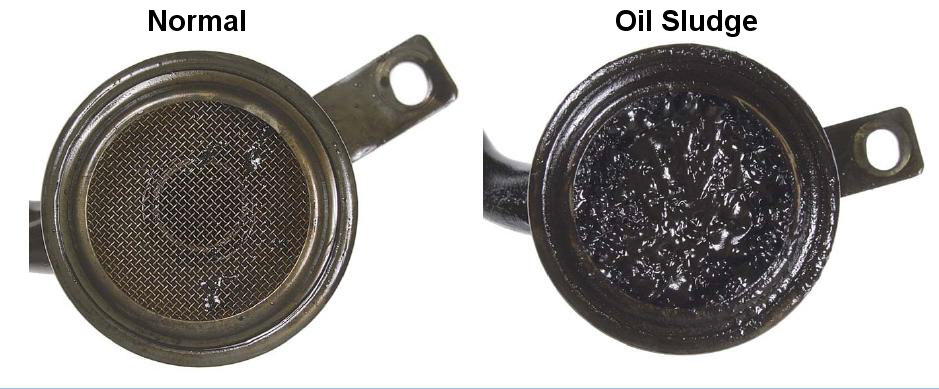
The only way to inspect the pickup tube is to remove the oil pan from the engine. If the tube is clogged or full of sludge, replace it. Trying to clean out the tube and screen is very difficult as debris can remain trapped inside and out of sight.
OIL PUMP WEAR CAUSES PRESSURE LOSS
Most people don't know that the oil pump is the only engine component that is lubricated with unfiltered oil. Remember, the [COLOR=blue! important][COLOR=blue! important]oil [COLOR=blue! important]filter[/color][/color][/color] is AFTER the pump, so the oil the pump sucks up from the crankcase is totally unfiltered (except for the relatively coarse pickup screen mentioned earlier). Consequently, if the oil is not maintained very well, or the vehicle operates in dirty, dusty environment, or the pistons and cylinders are worn and allow a lot of blowby into the crankcase, the oil pump will wear at an accelerated rate.
The tolerances inside most stock production oil pumps are not very close, so one pump's flow may vary as much as 20% to the next. Even so, it's usually more than good enough for a [COLOR=blue! important][COLOR=blue! important]stock [COLOR=blue! important]engine[/color][/color][/color].
If the gears inside the oil pump are worn, or there are excessive clearances between the gears and pump housing, or the housing or end plate are worn, the pump will leak pressure internally and may not deliver as much oil flow to the engine as it did when it was new.
The rotating gears inside the oil pump siphon oil from the crankcase through a pickup tube into the pump. The gears then push the oil through the pump and out the discharge port. From here, the oil goes to the oil filter. If the oil is really cold and thick, the bypass valve on the oil filter will open and allow unfiltered oil to bypass the filter. This is necessary so a cold engine will still develop normal oil pressure until it warms up and the oil thins out.
OIL PUMP DESIGN
The three basic types of oil pumps include:
* Twin gear pumps, where one gear is connected to a shaft that is driven off the camshaft or distributor. This type of pump is usually mounted inside the oil pan on the bottom of the engine block. The pump usually turns at half engine speed.
* Gerotor pumps that have a small gear rotating inside a larger outer gear. This type of pump can also be mounted on the bottom of the engine inside the oil pan.
* Internal pumps, which are usually mounted inside the front [COLOR=blue! important][COLOR=blue! important]engine [COLOR=blue! important]cover[/color][/color][/color] and are driven by the crankshaft. The gear design is usually a gerotor style, but this type of pump turns at the same RPM as the engine. Thus, it can generate more flow and oil pressure. This design is often used on overhead cam engines.
OIL PRESSURE CHECKS
As mentioned earlier, the only way to know for sure if an oil pump is generating normal pressure is to remove the sending unit on the engine block, and screw-in a mechanical oil pressure gauge. If the gauge does not show normal oil pressure, the pump is bad, or the pickup tube is blocked.
There is no way to easily bench test an oil pump to see if it is good or bad. To get an accurate indication of flow, you would have to simulate the resistance the pump sees inside an actual engine, and have a highly accurate gauge that can measure glow in gallons per minute. Oil pump manufacturers have their own custom test equipment that can bench test the flow characteristics of their oil pumps, but this type of equipment is not available to repair shops or anyone else.
About all you can do is disassemble your oil pump and look for obvious signs of wear or damage. With oil pumps mounted inside the bottom of the engine, this requires removing the oil pan. With oil pumps mounted inside the front engine cover, it requires tearing everything off the front of the engine and removing the cover. Both can be a big, expensive jobs!
Internal oil pump clearance specifications vary depending on the type of pump and the manufacturer, but minimal clearances are essential for good flow and oil delivery. Feeler gauges can be used to check the clearance between the gears, between the gears and housing, and between the tops of the gears and the cover. If clearances exceed specifications, the pump is worn or has sloppy assembly tolerances and needs to be replaced.
With twin-gear type pumps, it is possible to block sand or machine down the face of the pump housing to reduce the clearance between the tops of the gears and the pump cover. The flow characteristics of the pump can also be improved by gently rounding and blending the inlet and outlet ports inside the housing to eliminate sharp edges. Some high performance oil pumps have additional slits and slots to control internal lubrication and to eliminate cavitation that can disrupt oil flow at higher engine speeds.
OIL PUMP INSTALLATION
If you are replacing an oil pump with a new one, make sure it is the correct pump for your engine. A pump that does not have sufficient flow capacity may starve the engine for oil. On engines where the pump bolts up against the bottom of the block, there may or may not be a gasket or o-ring between the pump housing and engine. This can be a leak path for oil pressure, so make sure the gasket or seal is installed properly. If there is no gasket, some aftermarket suppliers now make thin copper gaskets that can be installed between the pump and engine to prevent pressure losses.
With crankcase mounted oil pumps, don't reuse the old oil [COLOR=blue! important][COLOR=blue! important]pan [COLOR=blue! important]gaskets[/color][/color][/color] even if they are rubber rather than cork or fiber. Install new gaskets for a leak-free seal.
The first indication of trouble may be a flickering oil pressure warning light or a low oil pressure reading on a dash gauge. If the warning goes unnoticed or is ignored, the next clue that something is amiss may be valve clatter as the hydraulic lifters or lash adjusters are starved for oil and ingest air. If the motorist keeps on driving in spite of the obvious warnings and audible protests from under the hood, the next sound he hears may be rapping or knocking noises from the rod bearings, which will eventually be followed by dead silence as the [COLOR=blue! important][COLOR=blue! important]engine[/color][/color] seizes and the vehicle coasts to a stop.
All engines will lose a certain amount of oil pressure over time as normal wear increases engine bearing clearances. But unusually low oil pressure in an engine regardless of mileage is often an indication that something is seriously wrong and requires immediate attention. So anytime a vehicle has a low oil pressure condition, or you are aware of any of symptoms that may be due to a loss of oil pressure (warning light on or flickering, low gauge reading, valve noise or bearing noise), don't delay in investigating the cause.
CAUSES OF LOW OIL PRESSURE
In a high mileage engine, low oil pressure is often due to a combination of worn main and rod bearings and [COLOR=blue! important][COLOR=blue! important]crankshaft[/color][/color] journals. The oil pump itself does not create pressure. It produces flow and the resistance to that flow produces pressure. Resistance is created by the orifices in the [COLOR=blue! important][COLOR=blue! important]engine [COLOR=blue! important]block[/color][/color][/color] through which the oil flows, and the amount of clearance between the bearings and crankshaft journals. As the bearings wear, clearances increase allowing increased flow which reduces pressure.
Okay, so you already knew that. But what you may not realize is that it doesn't take much of an increase in bearing clearances to cause a noticeable drop in oil pressure as well as noise. This applies to brand new engines as well as high mileage ones.
Excessive bearing clearances (more than about .001 inch per inch of diameter of the crankshaft journal) can cause up to a 20 percent or greater drop in oil pressure, which may in turn have an adverse effect on lubrication elsewhere in the engine (such as the camshaft and upper valvetrain, especially in overhead cam engines). Whether the excessive clearances are due to normal wear or "loose" assembly tolerances makes no difference because the end result is exactly the same. Excessive bearing clearances will also increase engine noise and pounding, which over time can lead to bearing fatigue and failure.
Recommended bearing clearances vary a great deal depending on the engine application, but many engine rebuilders today aim for about .001 to .002 inch clearance in the main and rod bearings. This compares to as much as .004 inch of clearance that may be present in some new engines from the factory!
Excessive clearances elsewhere in the engine can also reduce oil pressure. This includes wear in the lifter bores, excessive clearances between the camshaft journals and cam bearings, and excessive end play in the cam. Of course, any cracks in the oil galleys, leaking galley plugs, or leakage between the oil pump and block will also reduce pressure.
The only cure for low oil pressure due to excessive bearing clearances is to reduce the clearances by replacing the bearings or overhauling the engine. Installing a new oil pump or a higher pressure pump won't help because the bearings have too great a leakage rate to hold the required pressure. Installing a higher volume oil pump can increase flow and regain a little lost pressure. But the underlying clearance problem will still be there, which will accelerate bearing noise, wear and fatigue.
Another common cause of low oil pressure is wear or excessive clearances in the oil pump itself. Specifications vary, but as a rule gear type oil pumps should have less than about 0.003 inches of end play between the gears and cover. The clearances between the teeth and pump housing should usually be less than about 0.005 inches. With rotor style pumps, the clearance between the outer rotor and pump housing should usually be less than 0.012 inches, with no more than about 0.010 inches between the inner and outer rotor lobes. Too much clearance inside the pump will reduce the pump's ability to pump oil efficiency, which reduces flow and pressure.
Because of the close tolerances that are required inside the oil pump, debris of any kind can cause havoc if it gets sucked into the pump. Anything larger than the minimum internal clearances can score or jam the pump. Debris such as pieces of old valve stem seals, gasket material, plastic chips from a worn timing chain gear, bearing material, casting flashing, sand, dirt, etc., may be harmful or fatal if ingested.
But how can this kind of crud get inside the pump, you ask? The screen that is on the oil pump pickup tube in the crankcase only prevents relatively big pieces of debris from being drawn into the pump, and even then it does not always do that because most pickup screens have some type of bypass valve or vent that allows oil to bypass the screen if the screen becomes plugged or the oil is too thick to pass through the screen. The holes in the screen itself measure about 0.040 inches square, which are huge openings as far as debris is concerned. But the holes are large by design so the screen will flow an adequate amount of oil when the engine is cold and the oil in the crankcase is thick (which is why you should always follow the vehicle manufacturer recommendations on oil viscosity). All this means the oil pump is the only engine component that is continually lubed with unfiltered oil! The oil does not pass through the filter until after it leaves the pump. So any abrasive debris that finds its way into the crankcase will first pass through the pump before it is trapped by the filter. No wonder oil pumps wear out and break.
Restrictions in the pickup tube screen can choke off the flow of oil into the pump, reducing flow and pressure. Even a relatively small amount of varnish buildup on the screen can restrict oil flow at higher engine speeds. A coating only .005 inch thick on the screen will reduce the total "open" area of each hole to .030 inches, causing a whopping 44 percent reduction in oil flow!
The pressure [COLOR=blue! important][COLOR=blue! important]relief [COLOR=blue! important]valve[/color][/color][/color], which may be located on the pump body or elsewhere on the engine, can be yet another cause of low oil pressure if the valve sticks open or is held open by a small piece of debris. The relief valve is designed to limit oil pressure as engine speed increases. The valve opens when pressure reaches a preset value (typically 40 to 60 psi). This vents oil back into the crankcase and limits maximum oil pressure in the engine. The reason for doing so is to prevent oil pressure from reaching dangerous levels. Too much oil pressure can be just as bad as too little because excessive pressure can rupture the [COLOR=blue! important][COLOR=blue! important]oil [COLOR=blue! important]filter[/color][/color][/color] or even blow out pressed-in oil galley plugs in the block.
Low oil pressure may also be the result of air in the pump. If there is too little oil in the pan, air can be drawn into the pump. But this can also happen if the crankcase has been overfilled. The oil can become aerated (full of tiny bubbles) because it is making contact with the spinning crankshaft and is being churned into foam.
Sometimes the engine may become starved for oil at higher rpms because the oil is not returning quickly enough to the crankcase. The underlying cause here is usually severe varnish buildup that restricts the oil return holes in the head.
Leakage between the oil pickup tube and pump, as well as between the pump and block can also suck air into the pump. It is not unusual to find engines where the pickup tube has fallen completely off, causing a complete loss of oil pressure.
A plugged oil filter can be yet another cause of low oil pressure. When the oil leaves the pump, it passes through the filter before going on to the bearings and oil galleys. All filters create a certain amount of resistance to flow that increases with the rate of flow. But the amount is not much, typically only a couple of pounds. But as the filter becomes clogged with debris, the restriction created increases. Eventually the point may be reached where no oil will pass through the filter element. So to prevent such a blockage, a pressure relief valve located in the filter or where the filter mounts to the block is designed to open if the pressure differential across the filter exceeds a preset value (typically 5 to 40 psi). This allows the oil to bypass the filter and keep on flowing. But the engine's oil pressure will be reduced to that of the bypass valve. Replacing the plugged filter will solve the problem.
DIAGNOSING LOW OIL PRESSURE
A good place to start your diagnosis of a low oil pressure condition is at the dipstick. Check the oil level to see that it is at the proper level (not low and not overfilled). If low, the engine may be burning oil, leaking oil and/or be neglected. Adding oil may temporarily remedy the low oil pressure condition, but unless the oil level is properly maintained by your customer the problem may reoccur.
If the engine is leaking oil, recommend new gaskets or seals to fix the leak. If the engine is burning oil, the valve guides and seals are most likely worn, but the rings and cylinders might be bad, too. A wet compression test and/or leakdown test will tell you if the valve guides or rings and cylinders are worn. The least expensive fix in the case of worn guides would be to install new valve guide seals (if possible) without pulling the head. But the best fix would be to pull the heads and have the guides lined, knurled, replaced or reamed for oversized valve stems. Worn rings and cylinders would call for a complete overhaul.
Also note the condition of the oil and make sure it is the correct viscosity for the application. Heavier viscosity oils such as 20W-50, straight 30W and 40W may help maintain good oil pressure in hot weather, but are too thick for cold weather driving and may cause start-up lubrication problems especially in overhead cam engines. Light viscosity oils, on the other hand, such as straight 10W or 5W-20 may improve cold weather starting and lubrication, but may be too thin for hot weather driving to maintain good oil pressure. That is why most OEMs today recommend 5W-30 for year-round driving in modern engines.
If the oil level is okay, the next thing to check would probably the oil pressure sending unit. Disconnect the unit and check the warning lamp or gauge reading. If the warning light remains on with the sending unit disconnected, there is probably a short to ground in the warning lamp circuit. Likewise, if there is no change in a gauge reading the problem is in the instrumentation not the engine.
Bad oil pressure sending units are quite common, so many technicians will replace the unit without checking anything else to see if that cures the problem. This approach might save you some time, but it is risky because unless you measure oil pressure directly with a gauge attached to the engine you have no way of knowing if pressure is within specifications or not. Most warning lamps won't come on until oil pressure is dangerously low (less than 4 or 5 lbs.). So don't assume the absence of a warning lamp means oil pressure is okay, especially if the engine is making any valve or bearing noise.
If a check of oil pressure reveals unusually low readings, check the filter. It is possible the filter might be plugged with gunk. Ask the customer when he last had the oil and filter changed. Or, replace the filter and see if that makes a difference.
The next step would be to drop the oil pan and check the oil pump pickup screen. If the screen is clogged with debris, you have found the problem. Also, check to see that the pickup tube is properly mounted and positioned, firmly attached to the oil pump (no leaks) and is not obstructed.
If the oil pump is mounted inside the crankcase, the next step might be to remove and inspect the pump. Open the pump cover and measure clearances. Also, check for scoring or other damage. A broken pump drive would tell you something entered and jammed the pump. If the pump is worn or damaged, replacement is the only option.
If the pump appears to be okay, the next step would be to measure the rod and main bearing clearances. Check the clearances on the main bearing closest the pump (since this has the greatest effect on pressure), and clearances on the furthest rod bearing (since this will show the greatest wear). If the bearings are worn, they need to be replaced. But before you do so, carefully inspect and measure the crankshaft journals to check for wear, scoring, out-of-round and taper. If the journals need attention, the crank will also have to be reground or replaced.
Other checks might include camshaft end play, and/or pulling a valve cover or the [COLOR=blue! important][COLOR=blue! important]intake [COLOR=blue! important]manifold[/color][/color][/color] to check the cam bearings and lifters. Remember, excessive clearances or leaks anywhere in the engine's oil supply system can contribute to low oil pressure.
OIL PUMP INSTALLATION TIPS
If you have found a worn or damaged oil pump that needs replacing, read all the instructions before you attempt to install the new pump. This is common sense advice but it is amazing how many people assume they know how to replace an oil pump on an engine they have never replaced a pump on before. There can be surprises, so take a few minutes to review the instructions.
Most pump manufacturers do not recommend using a sealer on the pump mounting. Use the gasket or O-ring that is provided. The risk of using sealer is that if too much is applied, some of it may end up inside the pump or block the pump passageways.
Toss the old pickup tube and screen and replace with a new one. Yes, you can attempt to clean and reuse the old screen but it is risky. The bottom cover often hides a lot of debris, and solvent can loosen "hidden" debris inside the tube that will later be sucked into the pump.
Use the correct installation tool to seat the pickup tube in the pump. Do not force it in with a hammer as doing so may deform the pump housing and/or damage the tube.
Make sure the pump is properly mounted, and that the pickup tube is properly positioned before replacing the oil pan. The pickup screen should usually be about half an inch above the bottom of the oil pan. This will reduce the risk of drawing in debris that settles to the bottom of the pan. Make sure the pickup is not too high because you do not want it sucking air either.
The pump should be primed before the engine is started. This can be done by adding some oil to the pump before it is installed (packing the pump with grease is not recommended). If the pump is driven off the distributor, the distributor can be removed so the pump can be turned with a drill to prime the system.
Another alternative for all types of pumps is to use an aftermarket aerosol priming system that feeds oil under pressure to the engine through the oil pressure sending unit fitting. This type of system was originally developed for [COLOR=blue! important][COLOR=blue! important]rebuilt [COLOR=blue! important]engines[/color][/color][/color], but can be used in any application where the engine should be primed before it is cranked.
Install a new oil filter and fill it with oil (this does not work with filters that mount sideways on the engine unfortunately) to eliminate the delay in lubrication that normally occurs when the engine is first started after replacing the filter.
Finally, start the engine and make sure oil pressure is within specifications. Use a mechanical [COLOR=blue! important][COLOR=blue! important]pressure [COLOR=blue! important]gauge[/color][/color][/color] and do not rely on the dash gauge or the warning light to verify that the repairs you have made have eliminated the low oil pressure problem.
Oil Pumps
The oil pump supplies oil to lubricate your engine. If the oil pump is worn or is not turning, the engine will suffer a loss of oil pressure, which may result in engine damage or engine failure.
The first sign of trouble may be a low oil pressure warning light, a drop in the normal reading on you oil pressure gauge (if your [COLOR=blue! important][COLOR=blue! important]car[/color][/color] has one), or the appearance of ticking or clattering sounds from your engine.
As a rule, most engines only need about 10 PSI of oil pressure for every 1,000 RPM of engine speed. Oil pressure will read higher than normal when a cold engine is first started because the oil is thick. Oil pressure will gradually drop as the engine warms up and the oil thins out. So normal oil pressure on a warm engine cruising down the highway is typically 30 PSI up to 45 PSI.
SYMPTOMS OF OIL PUMP TROUBLE
The first thing you should do if any of these symptoms occur is to stop your car, turn off the engine, let it sit for a few minutes, then check the oil level on the dipstick. If the oil level is at or below the ADD line, add a quart of oil to bring the level back up to the full mark. Add as much oil as is needed to raise the level to the full mark. Then restart the engine. If the warning light remains on, or the oil pressure reading does not climb back up to its normal range, or the engine noise does not go away, you may have a bad oil pump.
The other possibilities include a bad oil pressure sending unit, or a problem with the oil pressure warning light circuit or oil [COLOR=blue! important][COLOR=blue! important]pressure [COLOR=blue! important]gauge[/color][/color][/color].
OIL PRESSURE SENDING UNIT
If the engine is NOT making any unusual noises and seems to be running normally, and the oil level on the dipstick is FULL, but you are still getting a low oil pressure warning light or low gauge reading, the fault could be a bad oil pressure sending unit.
The oil pressure sending unit is mounted on the [COLOR=blue! important][COLOR=blue! important]engine [COLOR=blue! important]block[/color][/color][/color]. On some applications, there is a spring-loaded pressure-sensitive diaphragm with a switch inside the sending unit. This switch completes the circuit to the low oil pressure warning light if oil pressure drops below a certain threshold. The unit may stop working if the diaphragm inside fails, if the switch is stuck, if the small hole that allows oil to enter the sending unit becomes plugged, if there is a loose, corroded or broken wiring connector at the sending unit, or there is a fault in the wiring circuit between the sending unit and warming light.
On vehicles that have an oil pressure gauge (electronic, not mechanical), the oil pressure sending unit has a small rheostat inside that sends a variable voltage signal to the oil pressure gauge when the diaphragm moves. A worn spot on the rheostat or any of the other problems just described for the simple pressure-type oil pressure switches can cause a problem.
FORD'S FAKE OIL PRESSURE GAUGE
On many Ford vehicles that were built from 1980 through the 1990s, the oil pressure sending unit has two switches, a low pressure and a high pressure. These vehicles also have an oil pressure gauge, but the reading on the gauge is not a true indication of real oil pressure. As long as the pressure to the sending unit is between high and low, the gauge will read normal. If oil pressure drops and trips the low [COLOR=blue! important][COLOR=blue! important]pressure [COLOR=blue! important]switch[/color][/color][/color], the dash gauge will now read low. Or, if oil pressure goes up and trips the high switch inside the sending unit, the dash gauge will read high. Consequently, don't rely on the oil pressure gauge for an accurate reading in these vehicles. It is only a gross indication if the oil pressure is low, normal or high.
OIL GAUGE PROBLEMS
If the engine is NOT making any unusual noises and seems to be running normally, the oil level on the dipstick is FULL, and you have replaced the oil pressure sending unit but are still getting a low oil pressure reading on the dash gauge, the fault could be in the wiring circuit between the sending unit and gauge, or the gauge itself might be bad.
Check the wiring connections on both ends as well as wiring continuity between the sending unit and gauge. If no wiring faults are found, hook up a pressure gauge directly to the oil pressure port on the engine and check oil pressure with the engine running. If the engine-mounted gauge shows normal oil pressure but the dash gauge is reading low, the problem is a bad dash gauge.
On the other hand, if the engine-mounted pressure gauge reads low and you have done all of the above, chances are the oil pump is worn, or it is not picking up enough oil because of a restriction or blockage in the pickup screen in the bottom of the crankcase.
OIL PUMP PICKUP PROBLEMS
The pickup tube has a screen on the end to prevent large chunks of anything bad that ends up in the crankcase from being sucked into the pump. But we are talking BIG chunks of debris, not normal wear particles or carbon or dust or other microscopic-sized abrasive particles that can cause pump wear over time.
The only way to inspect the pickup tube is to remove the oil pan from the engine. If the tube is clogged or full of sludge, replace it. Trying to clean out the tube and screen is very difficult as debris can remain trapped inside and out of sight.
OIL PUMP WEAR CAUSES PRESSURE LOSS
Most people don't know that the oil pump is the only engine component that is lubricated with unfiltered oil. Remember, the [COLOR=blue! important][COLOR=blue! important]oil [COLOR=blue! important]filter[/color][/color][/color] is AFTER the pump, so the oil the pump sucks up from the crankcase is totally unfiltered (except for the relatively coarse pickup screen mentioned earlier). Consequently, if the oil is not maintained very well, or the vehicle operates in dirty, dusty environment, or the pistons and cylinders are worn and allow a lot of blowby into the crankcase, the oil pump will wear at an accelerated rate.
The tolerances inside most stock production oil pumps are not very close, so one pump's flow may vary as much as 20% to the next. Even so, it's usually more than good enough for a [COLOR=blue! important][COLOR=blue! important]stock [COLOR=blue! important]engine[/color][/color][/color].
If the gears inside the oil pump are worn, or there are excessive clearances between the gears and pump housing, or the housing or end plate are worn, the pump will leak pressure internally and may not deliver as much oil flow to the engine as it did when it was new.
The rotating gears inside the oil pump siphon oil from the crankcase through a pickup tube into the pump. The gears then push the oil through the pump and out the discharge port. From here, the oil goes to the oil filter. If the oil is really cold and thick, the bypass valve on the oil filter will open and allow unfiltered oil to bypass the filter. This is necessary so a cold engine will still develop normal oil pressure until it warms up and the oil thins out.
OIL PUMP DESIGN
The three basic types of oil pumps include:
* Twin gear pumps, where one gear is connected to a shaft that is driven off the camshaft or distributor. This type of pump is usually mounted inside the oil pan on the bottom of the engine block. The pump usually turns at half engine speed.
* Gerotor pumps that have a small gear rotating inside a larger outer gear. This type of pump can also be mounted on the bottom of the engine inside the oil pan.
* Internal pumps, which are usually mounted inside the front [COLOR=blue! important][COLOR=blue! important]engine [COLOR=blue! important]cover[/color][/color][/color] and are driven by the crankshaft. The gear design is usually a gerotor style, but this type of pump turns at the same RPM as the engine. Thus, it can generate more flow and oil pressure. This design is often used on overhead cam engines.
OIL PRESSURE CHECKS
As mentioned earlier, the only way to know for sure if an oil pump is generating normal pressure is to remove the sending unit on the engine block, and screw-in a mechanical oil pressure gauge. If the gauge does not show normal oil pressure, the pump is bad, or the pickup tube is blocked.
There is no way to easily bench test an oil pump to see if it is good or bad. To get an accurate indication of flow, you would have to simulate the resistance the pump sees inside an actual engine, and have a highly accurate gauge that can measure glow in gallons per minute. Oil pump manufacturers have their own custom test equipment that can bench test the flow characteristics of their oil pumps, but this type of equipment is not available to repair shops or anyone else.
About all you can do is disassemble your oil pump and look for obvious signs of wear or damage. With oil pumps mounted inside the bottom of the engine, this requires removing the oil pan. With oil pumps mounted inside the front engine cover, it requires tearing everything off the front of the engine and removing the cover. Both can be a big, expensive jobs!
Internal oil pump clearance specifications vary depending on the type of pump and the manufacturer, but minimal clearances are essential for good flow and oil delivery. Feeler gauges can be used to check the clearance between the gears, between the gears and housing, and between the tops of the gears and the cover. If clearances exceed specifications, the pump is worn or has sloppy assembly tolerances and needs to be replaced.
With twin-gear type pumps, it is possible to block sand or machine down the face of the pump housing to reduce the clearance between the tops of the gears and the pump cover. The flow characteristics of the pump can also be improved by gently rounding and blending the inlet and outlet ports inside the housing to eliminate sharp edges. Some high performance oil pumps have additional slits and slots to control internal lubrication and to eliminate cavitation that can disrupt oil flow at higher engine speeds.
OIL PUMP INSTALLATION
If you are replacing an oil pump with a new one, make sure it is the correct pump for your engine. A pump that does not have sufficient flow capacity may starve the engine for oil. On engines where the pump bolts up against the bottom of the block, there may or may not be a gasket or o-ring between the pump housing and engine. This can be a leak path for oil pressure, so make sure the gasket or seal is installed properly. If there is no gasket, some aftermarket suppliers now make thin copper gaskets that can be installed between the pump and engine to prevent pressure losses.
With crankcase mounted oil pumps, don't reuse the old oil [COLOR=blue! important][COLOR=blue! important]pan [COLOR=blue! important]gaskets[/color][/color][/color] even if they are rubber rather than cork or fiber. Install new gaskets for a leak-free seal.


