


I changed the jets today in my 4150HP style Holley carburetor, so I thought I would do a quick "how to".
It really is a simple process, you just want to make sure you have plenty of rags if you are doing it on the car as I did, there will be fuel leak.
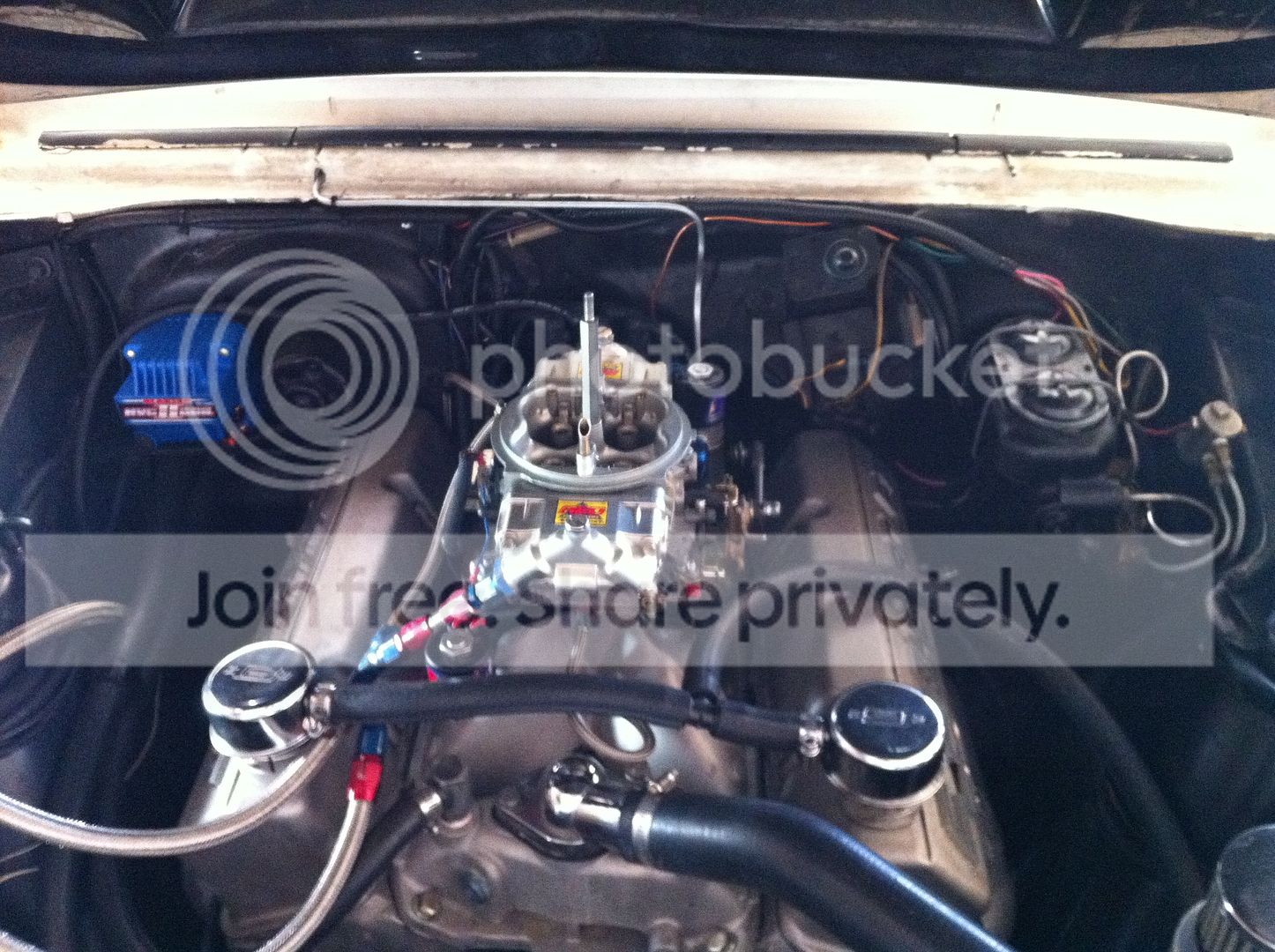
Start by disconnecting the fuel lines. I have done it without disconnecting them from the fuel bowels, but it is much easier if you go ahead and do this step. I have regretted it every time I try to save time.

Next you will want to remove the 4 bolts that are holding on the fuel bowels and metering blocks. With this style of carb there will be a pair of bowels. A set in the front and rear. I like using 1/4 inch drive tools on carb work, because nothing needs to be tight enough that you need a 3/8 drive.
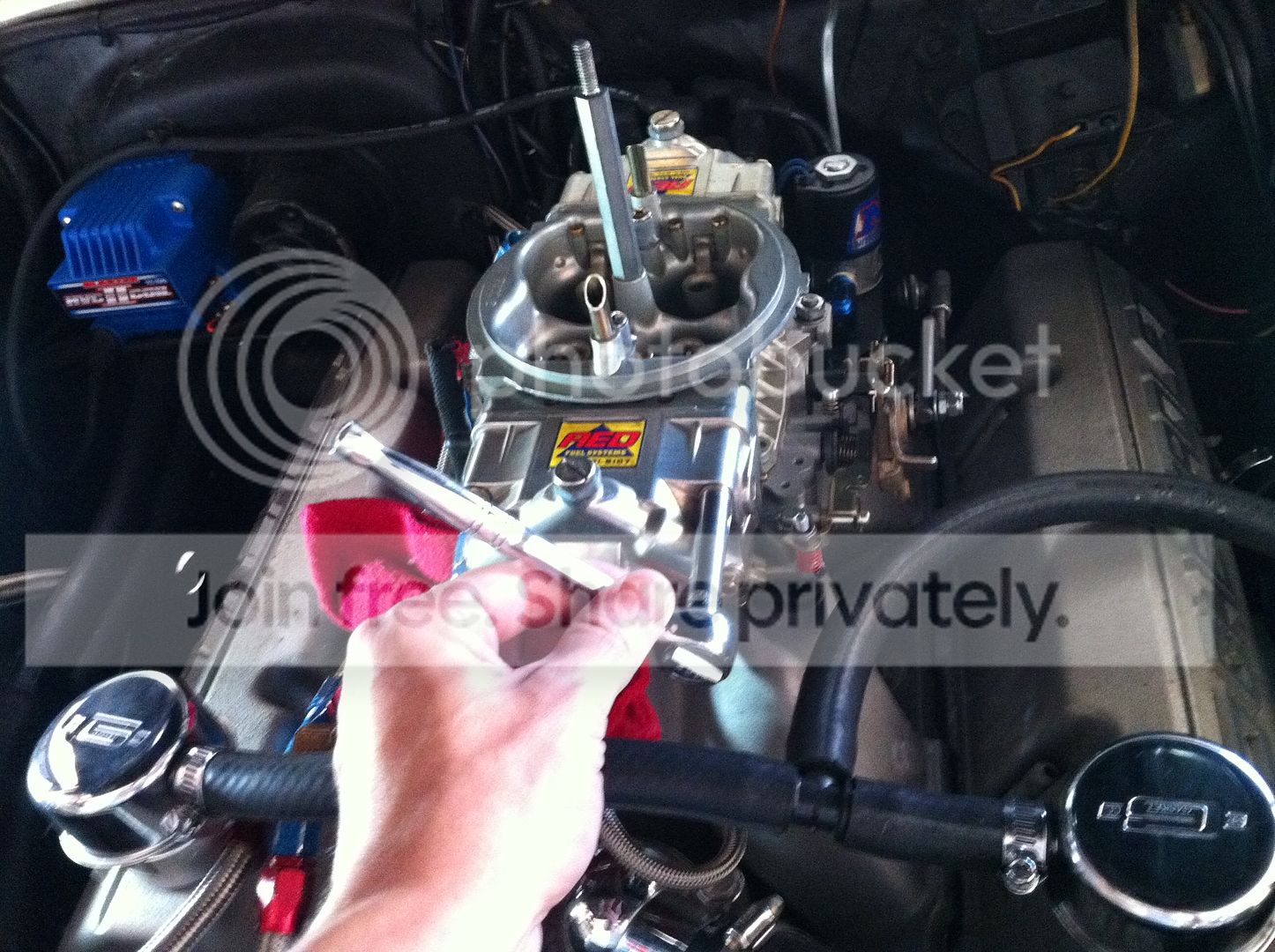
Make sure that you don't lose the plastic washer/gasket when removing the bolts.

Bowel is removed. Exposing the metering block. The jets are the two circular brass pieces toward the bottom.
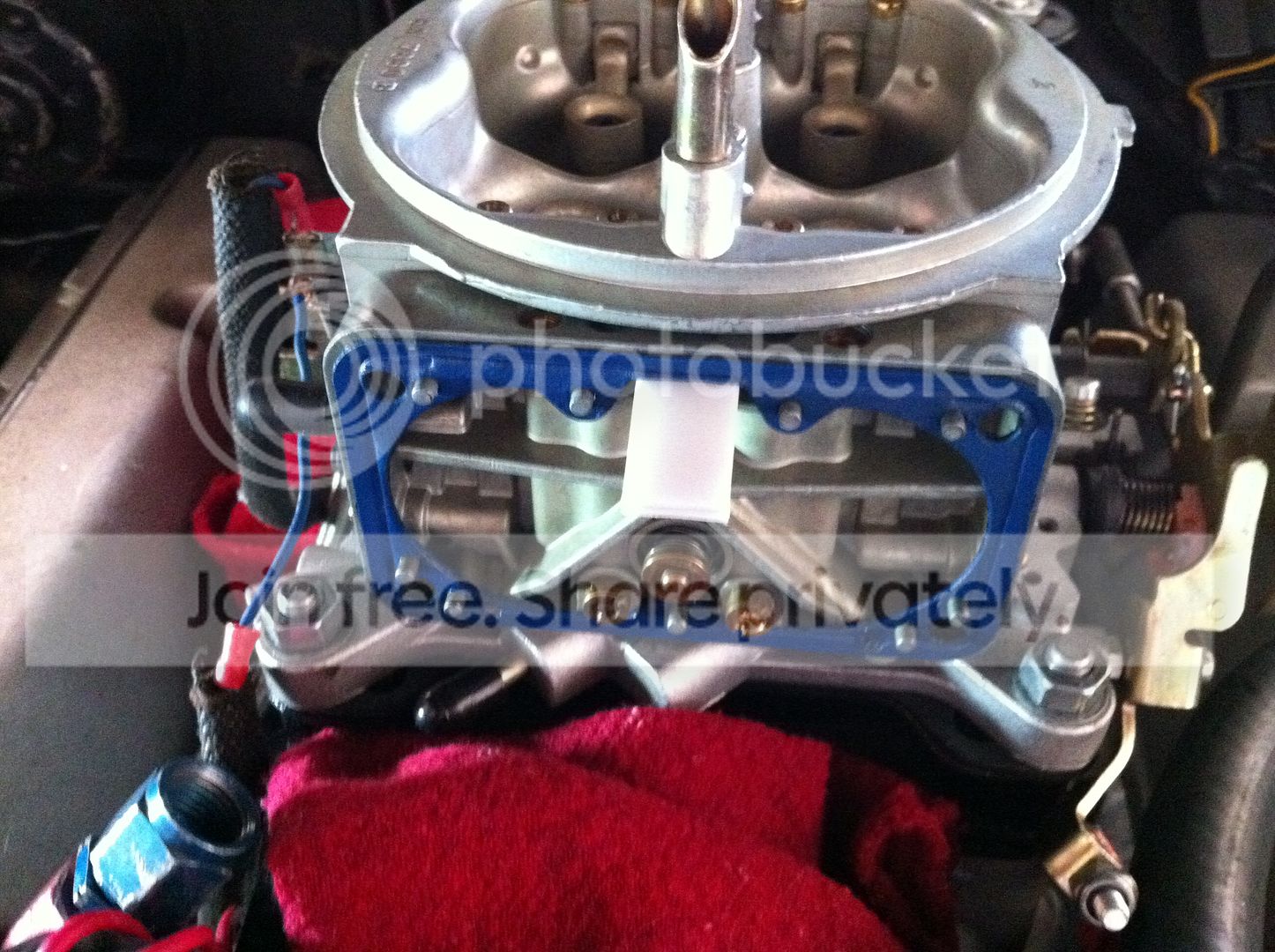
Remove the metering block being careful not to tear the gaskets if you plan on reusing them. This carb is pretty new so I wanted to reuse the gaskets, but I will change them after I have taken it apart a few times.
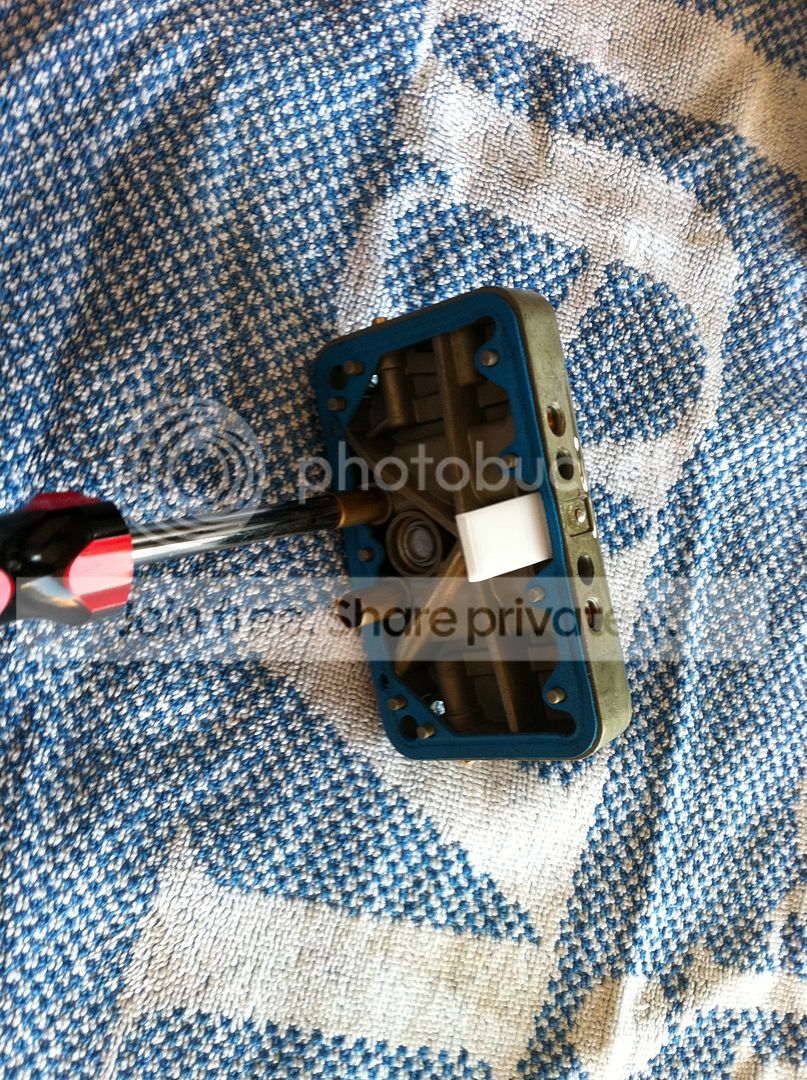
Rear metering block with jet extensions.
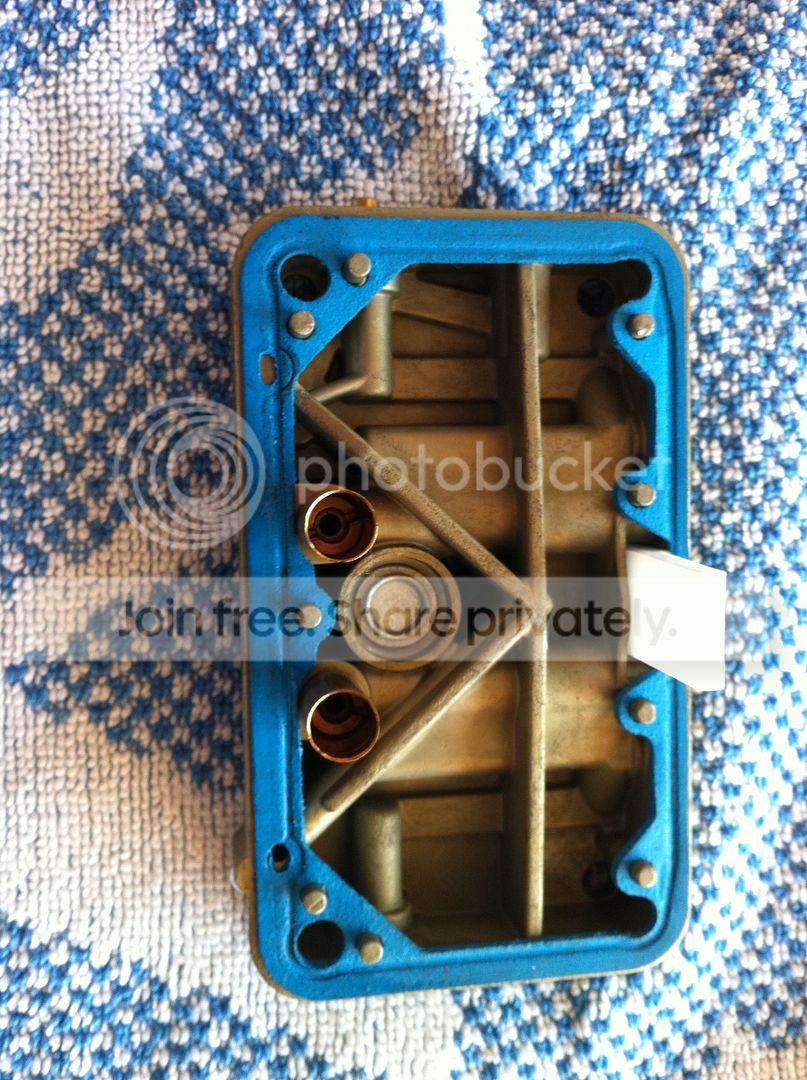

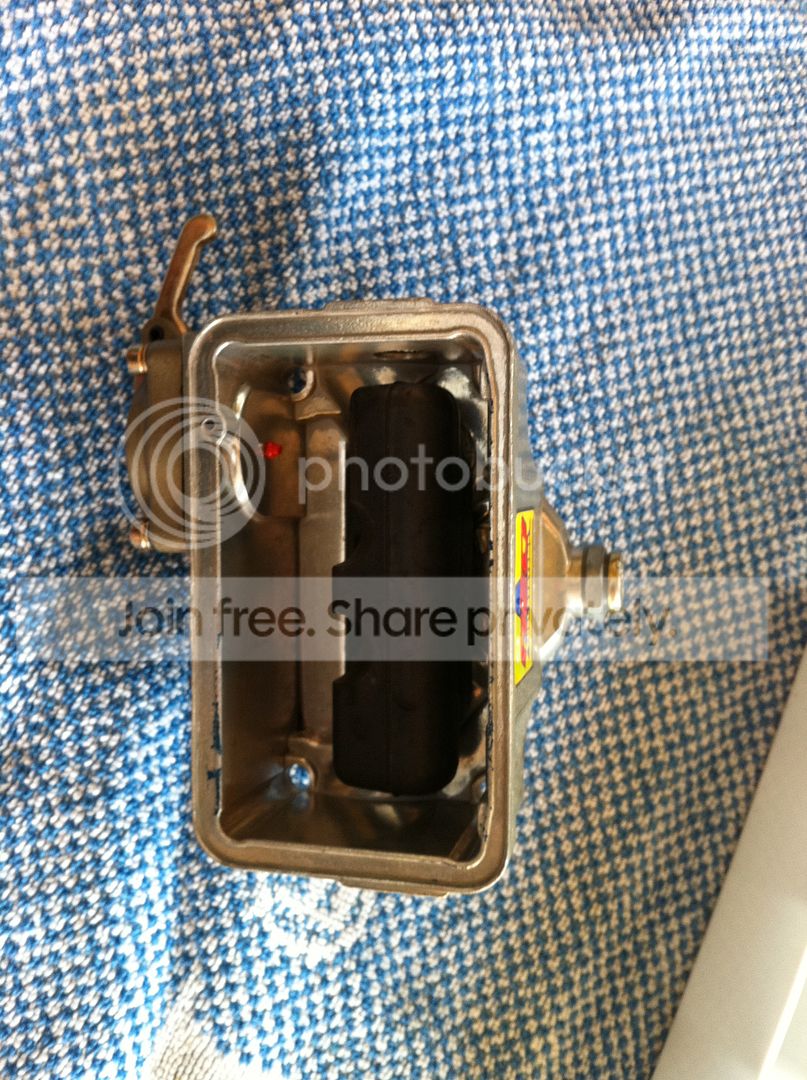
Rear bowel and float
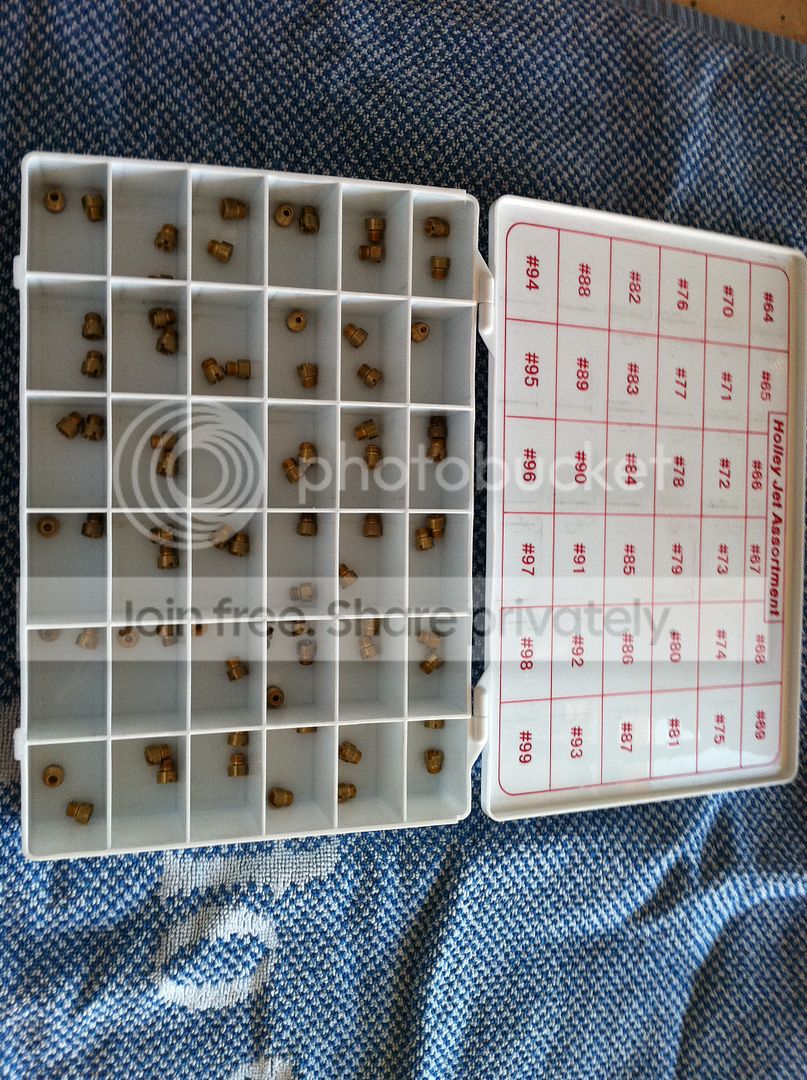
Jet assortment
After changing the jets, just reverse what was done. The key is it should go back together smoothly. If you have to force something, then something isn't right. Its either in a bind, dirty or in the wrong spot.
Tools of the trade...
Jet tool- screw drivers can be used (and i have done it often) but really shouldn't be used. Small nicks and gouges left can affect flow.
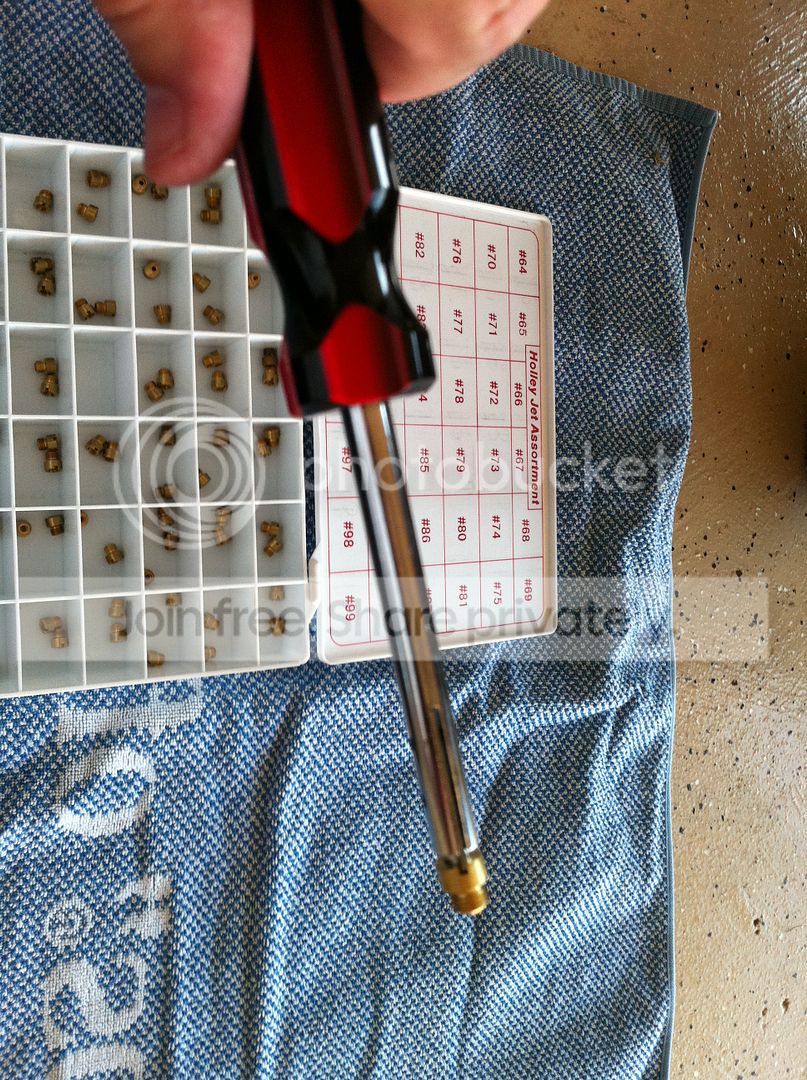
The most important tool

It really is a simple process, you just want to make sure you have plenty of rags if you are doing it on the car as I did, there will be fuel leak.
Start by disconnecting the fuel lines. I have done it without disconnecting them from the fuel bowels, but it is much easier if you go ahead and do this step. I have regretted it every time I try to save time.
Next you will want to remove the 4 bolts that are holding on the fuel bowels and metering blocks. With this style of carb there will be a pair of bowels. A set in the front and rear. I like using 1/4 inch drive tools on carb work, because nothing needs to be tight enough that you need a 3/8 drive.
Make sure that you don't lose the plastic washer/gasket when removing the bolts.
Bowel is removed. Exposing the metering block. The jets are the two circular brass pieces toward the bottom.
Remove the metering block being careful not to tear the gaskets if you plan on reusing them. This carb is pretty new so I wanted to reuse the gaskets, but I will change them after I have taken it apart a few times.
Rear metering block with jet extensions.
Rear bowel and float
Jet assortment
After changing the jets, just reverse what was done. The key is it should go back together smoothly. If you have to force something, then something isn't right. Its either in a bind, dirty or in the wrong spot.
Tools of the trade...
Jet tool- screw drivers can be used (and i have done it often) but really shouldn't be used. Small nicks and gouges left can affect flow.
The most important tool
Last edited:


